RV Storage Guide in Arkansas
Use this guide to compare vehicle size, clearance, surface type, access hours, prep steps, pricing, and what to ask before renting vehicle storage.
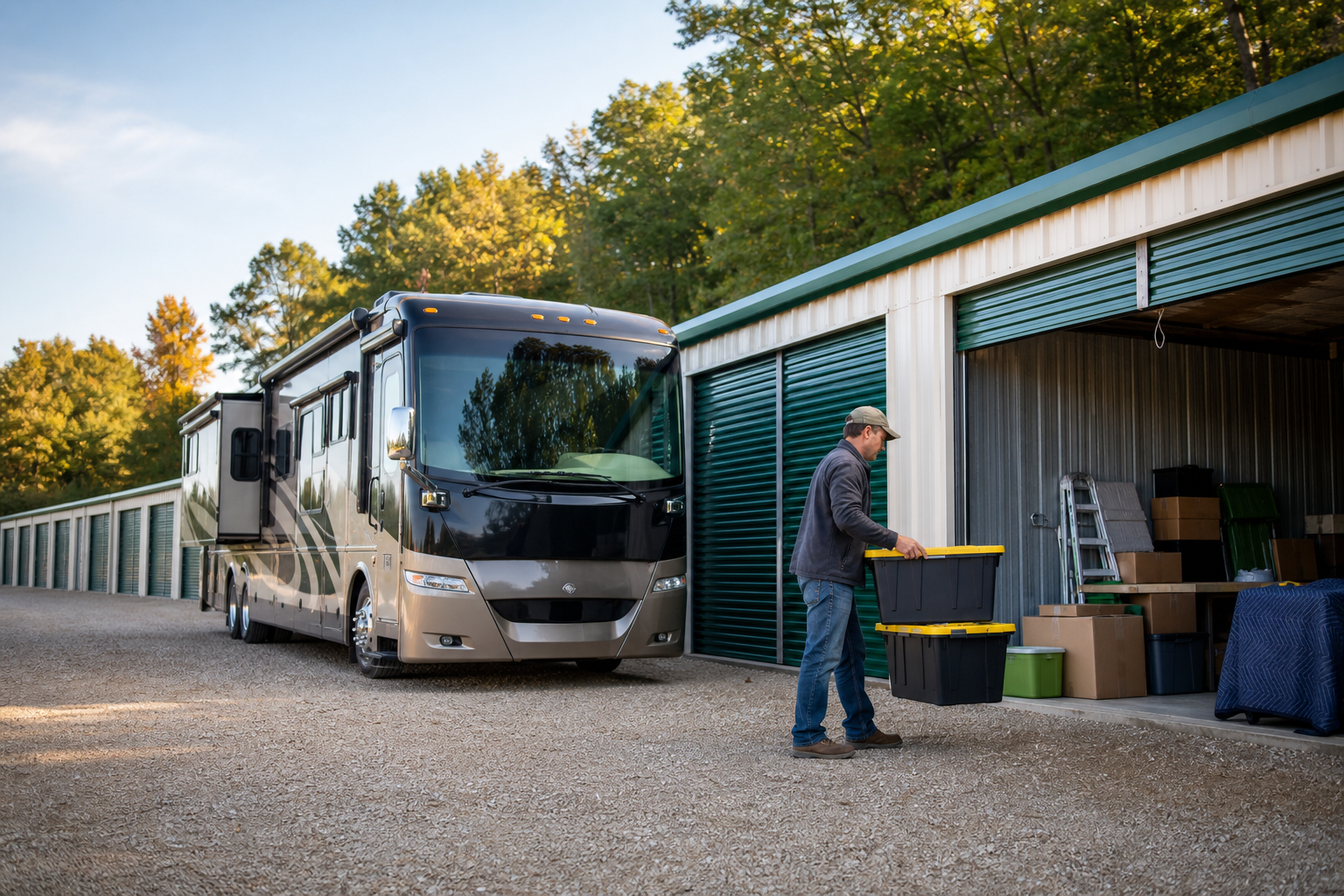
How to match your RV, trailer, or seasonal vehicle to the right space, access, and protection in Arkansas.
Storing an RV isn't like renting a closet for boxes. You're matching a length, a height, a turning radius, and a pickup schedule to a space you can actually get in and out of. This guide walks you through sizing the space to your rig, checking access and surface before you look at price, prepping the vehicle for months of Arkansas heat and humidity, and keeping your camping gear organized alongside it. We'll also cover when covered or enclosed protection is worth the premium and what to ask about access hours and fees before you rent.
What matters most
Use the article as a decision filter: choose the smallest unit that comfortably fits your load, use climate control for wood, electronics, documents, photos, and fabrics, prioritize access that matches your real schedule, and compare regular rates and fees before trusting the cheapest promotion.
Match the space to the vehicle and your pickup schedule
Start with a tape measure, not a rate sheet. Measure your rig's total length including the rear bumper, spare tire, and hitch or tongue, then its height to the top of the AC unit or antenna. A travel trailer that reads 24 feet on the title can measure 27 feet tip to tail. Outdoor RV spaces commonly run 12 to 14 feet wide and 30 to 50 feet long, so give yourself a few feet of slack to swing the door open and walk around the unit. Then think about how often you'll pull it out. If you camp most weekends spring through fall, a drive-up outdoor spot near the gate saves you a wrestling match every Friday; if it's true winter storage, a tucked-away covered space you touch twice a year is fine.
- Measure overall length with bumpers, hitch, and spare included
- Add 3–5 ft of maneuvering slack beyond the rig's footprint
- Weekend campers: prioritize a drive-up spot near the entrance
- Winter-only storage: a farther, cheaper space is fine
Do a dry run before you commit: ask to walk or drive the actual space, not a sample, and confirm your truck plus trailer can complete the turn into it. A space that fits on paper but forces a 12-point backing maneuver will wear you down by mid-summer.
Check access, clearance, and surface before you look at rate
The cheapest RV space is worthless if you can't get to it or your rig won't clear the entrance. Before comparing prices, confirm the gate width and any overhead clearance on the drive lanes, aisle turning room, and whether the surface is paved, gravel, or dirt. Gravel and dirt drain poorly and turn to ruts and mud after Arkansas thunderstorms, which is rough on a heavy fifth wheel and worse for a rig you're trying to level. Ask about access hours too: some facilities are 24/7, others close a gate at night, which matters if you roll back from the lake late on a Sunday. Only after access, clearance, and surface check out should you weigh the monthly rate and any add-on fees.
- Confirm gate width and any overhead clearance limits
- Check aisle turning room for your rig plus tow vehicle
- Paved beats gravel beats dirt for drainage and leveling
- Verify access hours match your real pickup times
Get the gate and clearance numbers in writing or measure them yourself, don't trust 'it'll fit.' If the surface is gravel, ask whether they regrade after storms — a rutted approach can crack a leveling jack or bend a stabilizer over a season.
Prep the vehicle for a longer storage stay
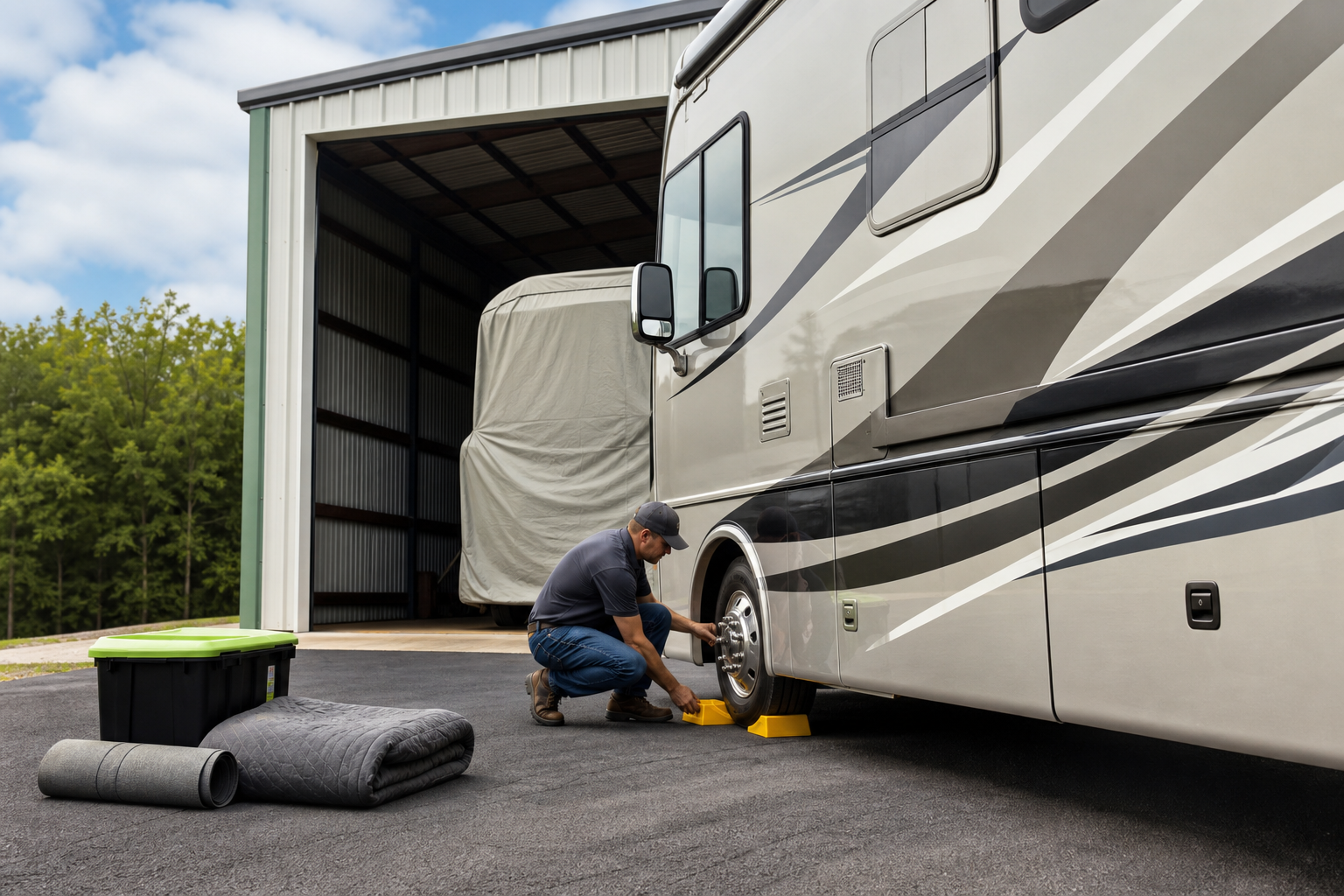
An RV that sits for months needs prep or you'll return to dead batteries, flat spots, and pests. Fill the fuel tank and add stabilizer so there's less air space for moisture and the fuel doesn't gum up injectors over the off-season. Inflate tires to the recommended PSI or slightly above, since they lose pressure while parked, and cover them to block UV — Arkansas summer sun cracks sidewalls fast. Disconnect the battery or keep it on a trickle charger so it doesn't discharge and sulfate. Then clean the interior thoroughly, close all vents and roof openings, and seal gaps to keep mice and wasps out. A breathable RV cover shields the roof and finish; a fitted cover matters more if you're in an uncovered spot.
- Full tank plus fuel stabilizer to limit moisture and gumming
- Tires at proper PSI, chocked and covered against UV
- Battery disconnected or on a tender
- Interior cleaned, vents closed, gaps sealed for pests
Set tire chocks and, for stays over about a month, move the rig a few inches occasionally or use leveling blocks under the tires to reduce flat-spotting. Skip parking brakes for very long storage on some rigs — engaged brakes can seize; check your owner's manual and use chocks instead.
Keep seasonal gear organized with the vehicle
The rig is only half the load — hoses, chocks, leveling blocks, camp chairs, and hookup gear tend to scatter. Consolidate them into a few labeled, sealed bins so you're not hunting for the sewer hose at the campground. If you're in an enclosed unit, you can stack bins alongside the RV; in an outdoor spot, store gear inside the rig or in a separate small unit rather than leaving it loose to weather and walk off. Keep anything that hates humidity — electronics, leather, canvas awnings, bedding — out of a bare outdoor stall. Group the frequently used items (chocks, wheel covers, battery tender leads) near the door so setup and teardown each trip take minutes, not an hour.
- Use labeled, sealed bins for hoses, chocks, and hookups
- Store humidity-sensitive gear indoors, not in a bare stall
- Keep quick-setup items near the door
- Follow facility rules on propane and flammables
Make a one-page checklist taped inside a bin lid listing every gear item, so you can confirm the rig is loaded before leaving and nothing's left at the site. Store fuel, propane, and stabilizer per facility rules — many prohibit flammables inside enclosed units.
Quick summary
| Decision | What to check | Why it matters |
|---|---|---|
| Space size | Overall length and height with bumpers, ladders, and AC unit | Undersizing means you can't open doors or maneuver; oversizing wastes money |
| Protection level | Uncovered vs. covered vs. enclosed and price gap | Arkansas UV, hail, and humidity degrade roofs, tires, and interiors |
| Access | Gate hours, clearance, aisle turning room, surface type | A cheap spot you can't reach or back into isn't cheap in practice |
| Climate control | Availability for interior electronics and soft goods | Humidity causes mildew and battery/electronics issues over long stays |
| Terms and fees | Month-to-month terms, deposits, and add-on charges | A low headline rate can hide fees that erase the savings |
Storage numbers worth checking
Use these numbers as decision anchors before comparing facilities. The goal is not to guess a perfect unit — it is to compare the same details across options.
List largest items, box count, and aisle needs.
Use these as comparison anchors.
Monthly rate, promo length, required fees.
Drive-up convenience vs. indoor protection.
| Check | What to compare | Why it matters |
|---|---|---|
| 5×10 | Boxes, small bedroom, seasonal items | A small unit can save money if it truly fits |
| 10×10 | Apartment contents or household overflow | Often a safer middle option for mixed items |
| 10×20 | Multi-room moves or large equipment | More room can reduce loading frustration |
| Climate control | Sensitive vs. durable belongings | Arkansas heat and humidity change the risk |
StorageGuide verdict
Use the article as a decision filter: choose the smallest unit that comfortably fits your load, use climate control for wood, electronics, documents, photos, and fabrics, prioritize access that matches your real schedule, and compare regular rates and fees before trusting the cheapest promotion.
Storage FAQs
What size space do I need for my RV?
Measure your rig's total length including bumper, hitch or tongue, and any rear-mounted spare, then add a few feet of slack. Outdoor RV spaces commonly run 12–14 feet wide and 30–50 feet long. A large Class A or long fifth wheel needs a 40–50 foot space, while a small camper van fits a much shorter one.
Do I need covered or enclosed storage in Arkansas?
It depends on your budget and how much the rig's finish matters to you. Arkansas summer sun and hail are hard on roofs, seals, and tires, so covered or enclosed protection pays off for newer or higher-value rigs. A well-covered rig in an uncovered lot can be an acceptable middle ground for budget-conscious owners.
How do I prep an RV for months of storage?
Fill the tank and add fuel stabilizer, inflate and cover the tires, disconnect the battery or use a trickle charger, clean the interior, and seal vents and gaps against pests. Set chocks and check your manual before engaging the parking brake for long stays.
Should I choose the cheapest RV space?
No. Confirm the space fits your rig, that you can maneuver into it, and that access hours and surface work for you before comparing rates. A low price on a spot you can't back into or reach after work costs you more in aggravation over a season.
Can I store camping gear with the RV?
Yes, but organize it. Use labeled, sealed bins and keep humidity-sensitive items like electronics and leather indoors rather than in a bare outdoor stall. Check facility rules before storing propane or fuel, since many prohibit flammables in enclosed units.
Find the right RV space in Arkansas
Compare RV and vehicle storage by size, access hours, and protection level, then match it to your rig and your camping schedule.