7 Tips for Vehicle Storage in Arkansas
Use this guide to compare vehicle size, clearance, surface type, access hours, prep steps, pricing, and what to ask before renting vehicle storage.
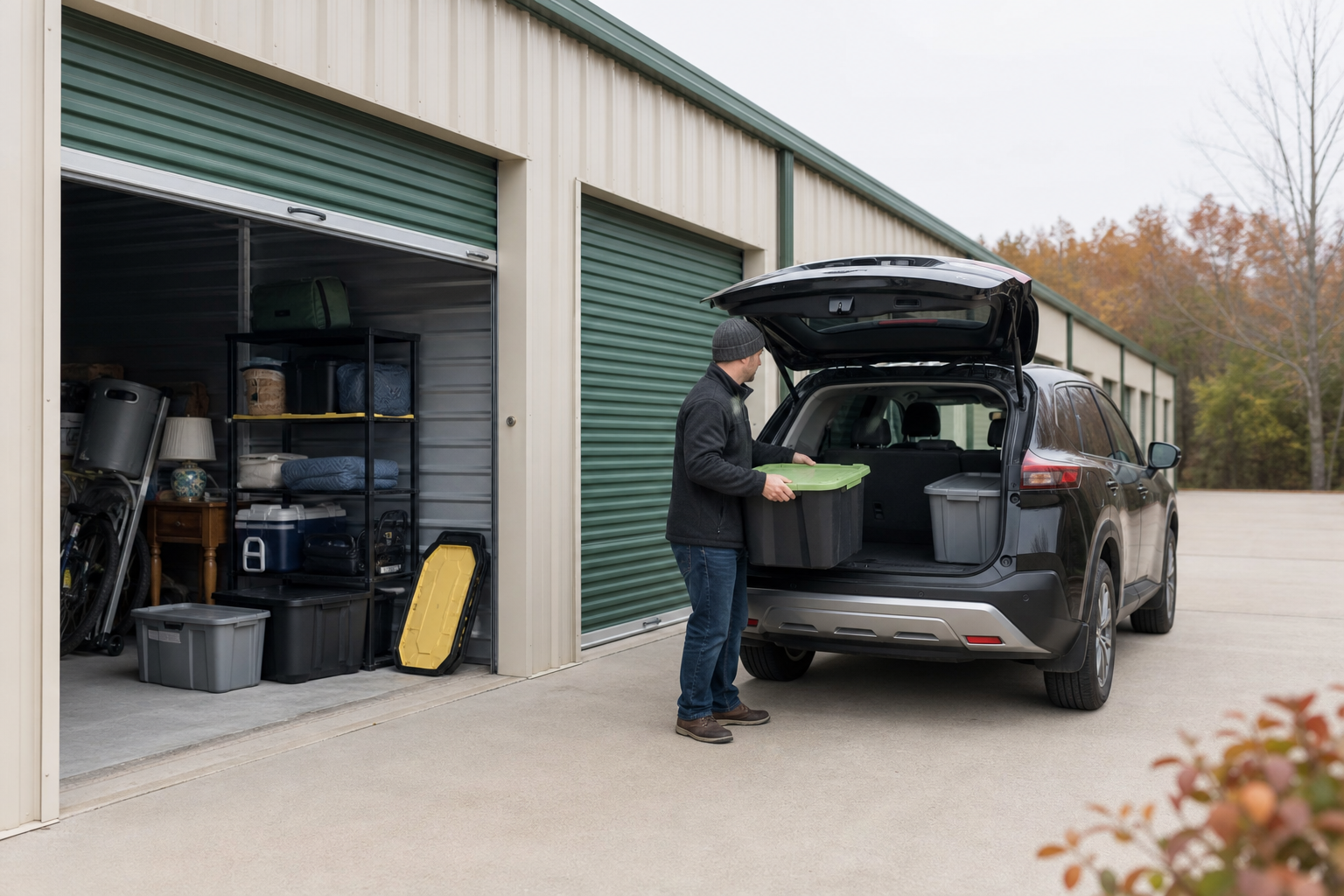
Match the vehicle to the right access, surface, and prep before you compare monthly rates.
Vehicle storage is less about the cheapest sticker price and more about whether you can actually get your vehicle in, out, and covered. Size the space for turning and trailer clearance, confirm access hours match your real pickup schedule, and add basic prep — cover, stabilizer, battery tender, tire care — for anything sitting more than a month. Arkansas heat and humidity make climate control worth considering for finishes, electronics, and upholstery on longer stays.
What matters most
Use the article as a decision filter: choose the smallest unit that comfortably fits your load, use climate control for wood, electronics, documents, photos, and fabrics, prioritize access that matches your real schedule, and compare regular rates and fees before trusting the cheapest promotion.
#1Match the vehicle size to the actual usable space
Listed unit or parking dimensions rarely account for side mirrors, a roof rack, a trailer tongue, or the swing of a door you need to open inside. Measure your vehicle at its widest and longest points — including the hitch and any trailer — and compare that to the usable footprint, not the round-number label. A truck that's technically 20 feet long needs more than a 20-foot stall once you factor in getting out of it. For RVs and boats on trailers, add clearance for the tongue jack and for backing in without scraping walls or neighboring units.
- Measure length including hitch, tongue, and trailer
- Measure width at the mirrors, not the body
- Leave room to open a door and walk around
Bring a tape measure and physically walk the space before signing. If you can't open the driver's door fully and step out without turning sideways, size up one increment — it's cheaper than a scraped panel.
#2Check access hours before you compare monthly rates
A lower monthly rate is worthless if the gate closes at 6 p.m. and you tow the boat home after dark on summer weekends. Vehicle storage lives or dies on access: confirm the posted gate hours, whether there's 24-hour access, and how the entry works — keypad, app, or staffed office. If you'll pull a boat out early Saturday for a lake run or grab an RV before a holiday trip, your access window matters more than a few dollars a month. Sort your shortlist by hours that fit your life, then compare rates within that group.
- Confirm gate hours and any 24-hour access
- Understand the entry method before renting
- Match hours to seasonal pickup patterns
Ask specifically how a wide vehicle or trailer clears the gate and drive lanes at peak times. A tight entry that backs up on weekend mornings can cost you more hassle than limited hours would.
#3Weigh surface type, turning space, and trailer clearance
Where the wheels sit changes how a vehicle stores. Paved and concrete surfaces keep tires clean and drain better; gravel or dirt can hold moisture against tires and make a heavy trailer harder to reposition. Beyond the surface, look at the approach: drive lanes need enough width for a full turn, and a long trailer needs a straight enough run to back in without a dozen corrections. Pull-through spaces solve most of this for RVs and boats. Indoor spaces protect the surface and the vehicle but usually add tighter maneuvering and door-height limits to plan around.
- Paved beats gravel for tire and trailer care
- Check drive-lane width for full turns
- Verify height clearance for indoor spaces
If you're on gravel and storing long-term, park on boards or pavers under the tires to reduce moisture contact and flat-spotting. Check the door or clearance height for anything with a rooftop AC, antenna, or rack before you commit.
#4Use a cover and basic prep for stays past a month
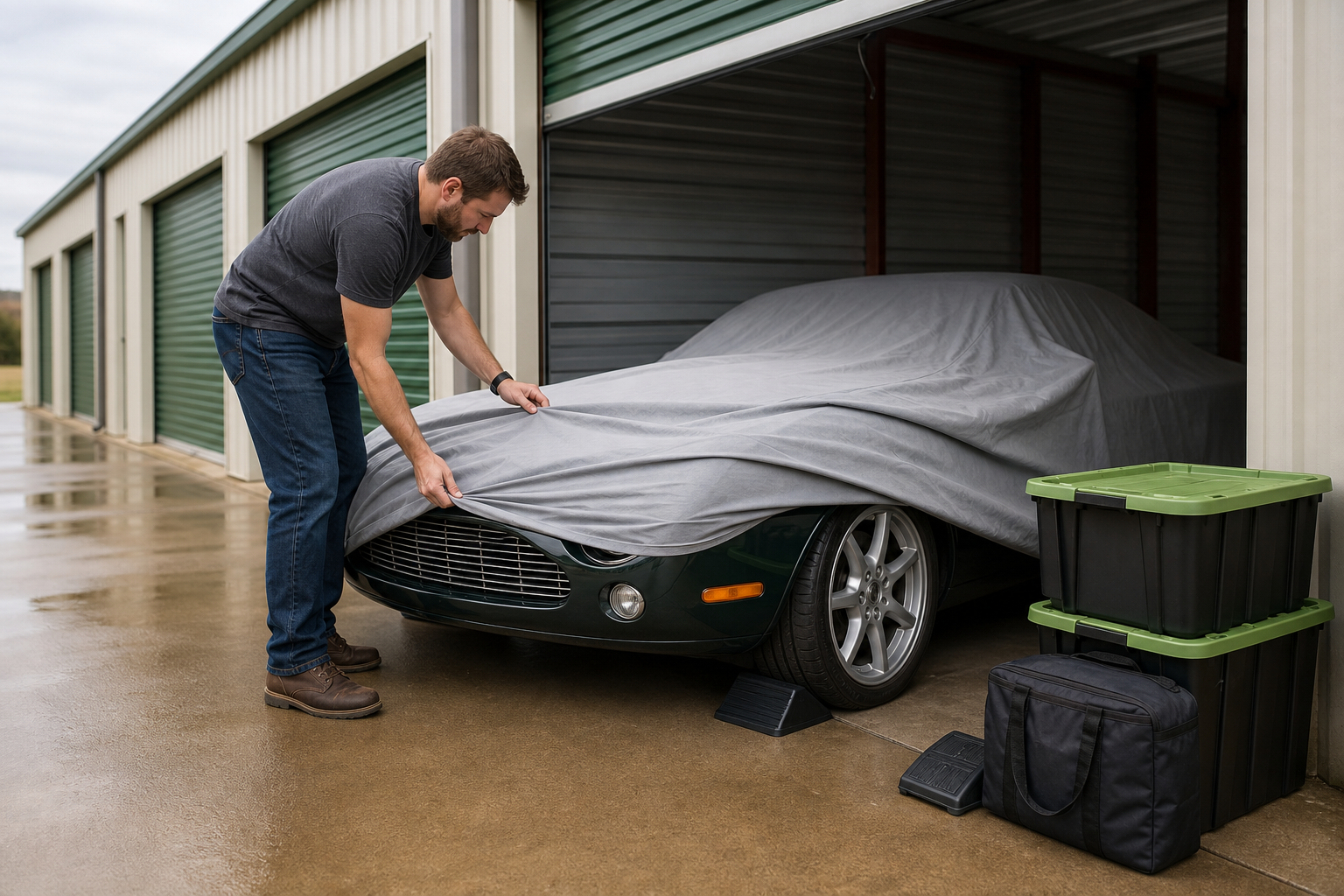
A vehicle parked under 30 days usually needs little more than a clean exterior and full tires. Past a month, prep pays off. Wash and dry the vehicle first so trapped dirt and moisture don't sit against paint, then use a breathable cover rather than a plastic tarp that traps condensation. Add a fuel stabilizer and run the engine briefly so it circulates, keep the battery on a maintainer, and inflate tires to spec to reduce flat-spotting. In an outdoor or non-climate space, Arkansas summer humidity makes moisture control the real enemy — a breathable cover and good airflow matter more than a fancy one.
- Wash and dry before covering
- Breathable cover, not a plastic tarp
- Stabilizer, battery maintainer, tires to spec
For stays over three months, either put the vehicle on jack stands or plan a short monthly drive to work out flat spots and keep fluids moving. Avoid leaving the parking brake engaged long-term — it can stick against the rotors.
#5Keep seasonal gear packed with the vehicle
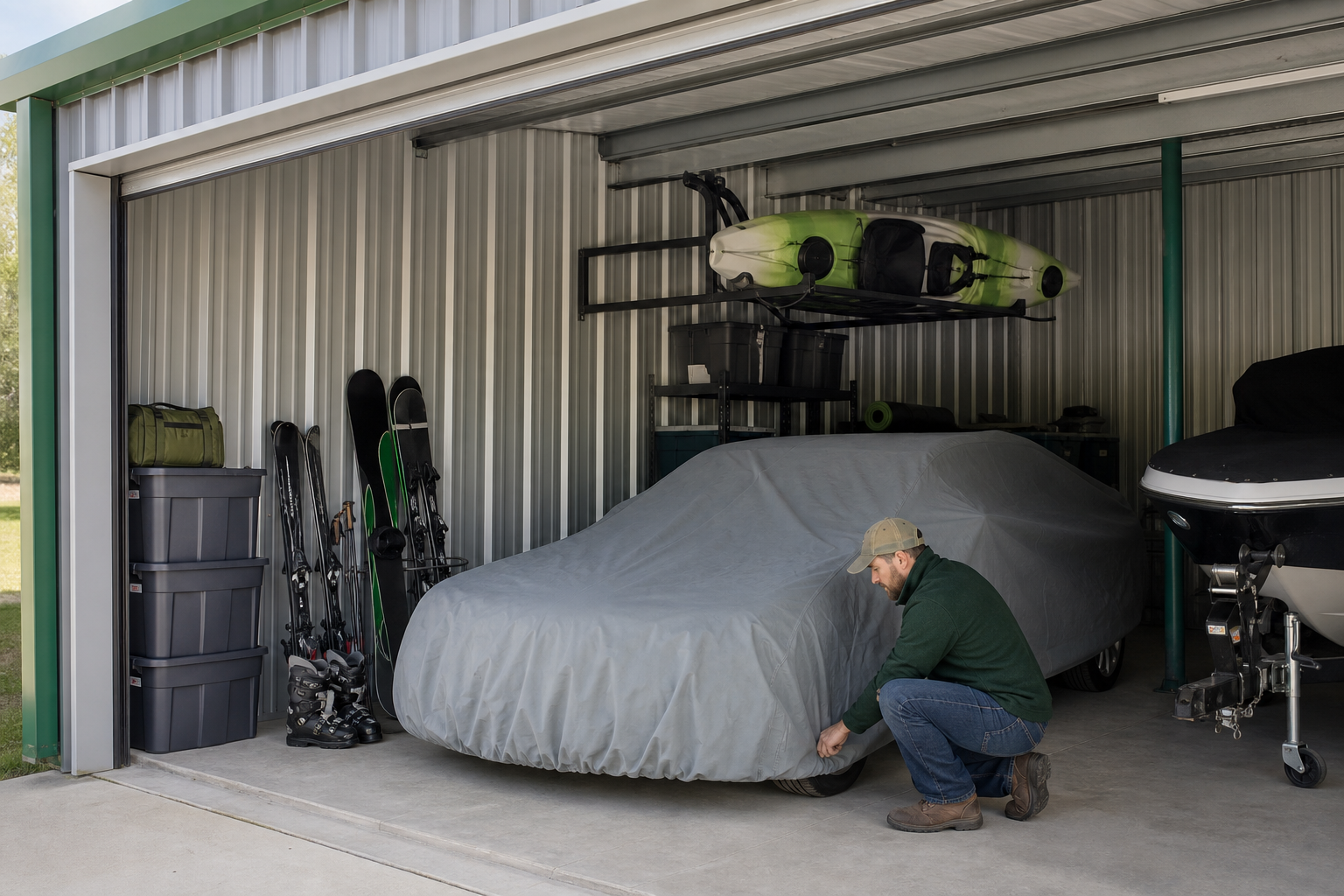
A lot of vehicle storage is really vehicle-plus-gear: life jackets and tow ropes with the boat, camp chairs and hoses with the RV, roof boxes and racks with the car. If your space allows it, store that gear in sealed bins so you're not hauling it separately every trip. Label bins by activity, not by contents, so a lake weekend is one grab. Keep anything that attracts pests — food, scented items — out entirely, and store soft goods like life vests or tents dry and off the floor to avoid mildew in humid months.
- Sealed bins for gear that rides with the vehicle
- Label by activity for one-grab loading
- Keep soft goods dry and off the floor
Keep a small 'first-trip' bin near the door with the essentials you always forget — registration copy, tie-downs, a tire gauge, the battery maintainer plug. Don't store fuel-soaked or oily rags with the vehicle; they're both a pest and a fire concern.
#6Confirm the rules for batteries, fuel, and equipment
Every facility sets its own limits on what can sit in a vehicle space, and vehicle storage has real safety rules behind them. Ask whether you can leave a battery connected to a maintainer, how much fuel is allowed in the tank, and whether gas cans, propane tanks, or spare fuel are permitted at all — most places restrict loose fuel and pressurized cylinders. Confirm insurance or proof-of-registration requirements up front, since many facilities ask for them on vehicles. Getting these answers before you rent avoids a move-in day surprise when your prep plan doesn't match the rules.
- Ask about fuel limits and loose gas cans
- Confirm battery maintainer and power access
- Have insurance and registration ready
If maintainers plug into shared or unit power, ask exactly what's available before you count on trickle-charging on site — otherwise plan to pull and charge the battery elsewhere. Empty and disconnect propane on any RV before storage regardless of the rule.
#7Pick the location that makes pickup realistic
The best location is the one you will realistically use. Compare the facility to your home, work, lake route, campus, or travel path. A slightly cheaper space can become a poor choice if every pickup adds a long detour.
- Pick for your actual towing route
- Weigh fuel and time across the season
- Do a dry run before a long commitment
Choose the location you will actually use. If pickup feels inconvenient, the storage plan will become frustrating fast.
Quick summary
| Decision | What to check | Why it matters |
|---|---|---|
| Space size | Usable footprint vs. vehicle including mirrors, hitch, trailer | Prevents scraped panels and impossible turns |
| Access hours | Gate hours, 24-hour access, entry method | Determines whether you can pick up when you need to |
| Surface & lanes | Paved vs. gravel, turning room, pull-through, height | Affects tire care and how easily you maneuver a trailer |
| Climate control | Indoor vs. covered vs. open for longer stays | Arkansas heat and humidity stress finishes, electronics, upholstery |
| Prep for length | Stabilizer, battery maintainer, tires, breathable cover | Stops fuel, battery, and flat-spot problems past 30 days |
| Facility rules | Fuel limits, battery power, insurance, registration | Avoids move-in surprises and safety violations |
| Location | Distance and route to lake, campus, or highway | Cheaper across town can cost more in fuel and time |
Storage numbers worth checking
Use these numbers as decision anchors before comparing facilities. The goal is not to guess a perfect unit — it is to compare the same details across options.
List largest items, box count, and aisle needs.
Use these as comparison anchors.
Monthly rate, promo length, required fees.
Drive-up convenience vs. indoor protection.
| Check | What to compare | Why it matters |
|---|---|---|
| 5×10 | Boxes, small bedroom, seasonal items | A small unit can save money if it truly fits |
| 10×10 | Apartment contents or household overflow | Often a safer middle option for mixed items |
| 10×20 | Multi-room moves or large equipment | More room can reduce loading frustration |
| Climate control | Sensitive vs. durable belongings | Arkansas heat and humidity change the risk |
StorageGuide verdict
Use the article as a decision filter: choose the smallest unit that comfortably fits your load, use climate control for wood, electronics, documents, photos, and fabrics, prioritize access that matches your real schedule, and compare regular rates and fees before trusting the cheapest promotion.
Storage FAQs
Do I need climate control to store a vehicle in Arkansas?
Not always. For short stays or rugged vehicles, covered or open parking is usually fine. But Arkansas summers combine sustained heat with high humidity, which is hard on paint, rubber seals, electronics, and upholstery over longer stays. If you're storing a vehicle with a sensitive interior, a classic or show car, or anything for several months, indoor climate-controlled space is worth the premium.
How long can a vehicle sit before I need to prep it?
Roughly a month is the common threshold. Under 30 days, a clean exterior and properly inflated tires usually cover it. Past a month, add a fuel stabilizer, keep the battery on a maintainer, inflate tires to spec to limit flat-spotting, and use a breathable cover. Over three months, consider jack stands or a short monthly drive to keep fluids moving and tires round.
What's the difference between drive-up and indoor vehicle storage?
Drive-up and pull-through spaces let you load, unload, and back in easily, which matters a lot for trailers and RVs, but they offer less protection from weather. Indoor spaces protect the vehicle and its surface and often add security, but usually come with tighter maneuvering and height limits. Match the choice to how often you'll access the vehicle and how sensitive it is.
Can I leave fuel in the tank and the battery connected?
Fuel in the tank is normal and generally recommended with a stabilizer for stays over a month, but rules on loose gas cans, propane, and pressurized cylinders vary by facility, so ask first. Leaving a battery on a maintainer depends on available power at your space — confirm what's accessible before you rely on trickle-charging on site, and be ready to charge the battery elsewhere if needed.
How do I size a space for an RV or boat on a trailer?
Measure the full rig — trailer tongue and hitch included — at its longest and widest points, then add clearance for backing in and for the tongue jack. Don't rely on the round-number label. A pull-through space removes most of the maneuvering problem. Also check height clearance for anything with a rooftop AC unit, antenna, or tower.
Find vehicle storage that actually fits
Compare unit sizes, access hours, and covered or indoor options near your lake, campus, or route before you commit to a rate.