Motorcycle Storage Guide in Arkansas
Use this guide to compare vehicle size, clearance, surface type, access hours, prep steps, pricing, and what to ask before renting vehicle storage.
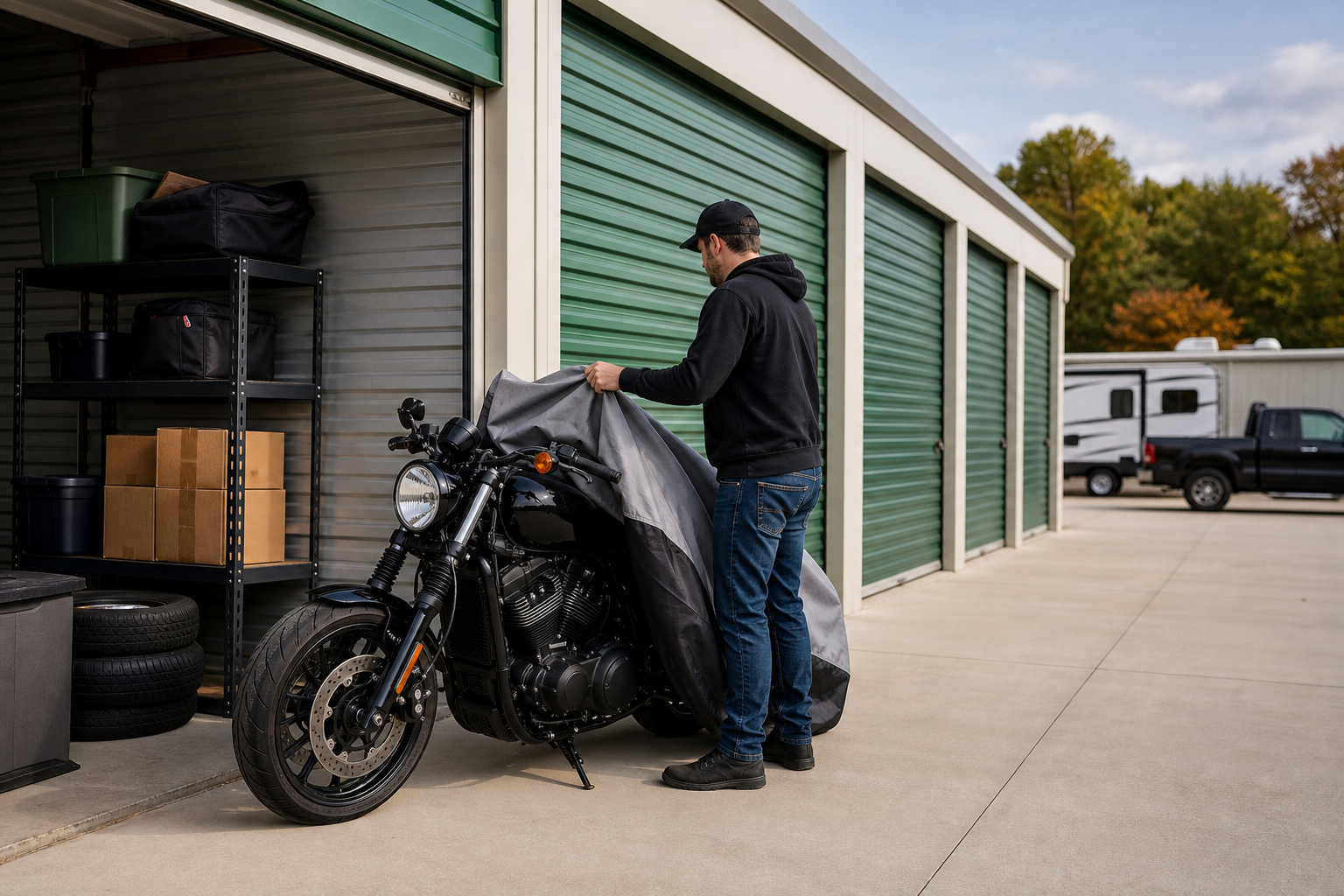
Match your bike to the right access, surface, and protection—and prep it so it starts in spring.
Storing a motorcycle isn't just parking it in a box. The right choice comes down to how you get the bike in and out, what the floor is like, and how often you'll ride during the season. This guide walks through sizing the space to the bike and your pickup schedule, checking access and clearance before you look at price, prepping the bike for a longer stay, and keeping helmets, gear, and a trailer organized alongside it. It also covers the fees and access-hour questions worth asking before you sign.
What matters most
Use the article as a decision filter: choose the smallest unit that comfortably fits your load, use climate control for wood, electronics, documents, photos, and fabrics, prioritize access that matches your real schedule, and compare regular rates and fees before trusting the cheapest promotion.
Match the space to the vehicle and your pickup schedule
Start with two numbers: the bike's footprint and how often you'll ride it this season. A single cruiser or sport bike fits comfortably in a 5×10, which leaves room to swing a leg over and store a cover and a couple of gear bins. Add a trailer, a second bike, or a tall touring model with cases, and you're looking at a 10×10 or 10×15. Pickup schedule matters just as much as size: if you plan to ride most weekends, you want a unit near a door with a straight path out, not one wedged at the back of an interior row where you have to shuffle around other stuff every time.
- One bike + gear: 5×10 is usually enough
- Bike + trailer or two bikes: 10×10 or 10×15
- Frequent rides: prioritize a drive up unit
If you'll pull the bike out more than twice a month, treat a drive-up unit as non-negotiable—even at a slightly higher rate. The time you save on frequent trips outweighs the difference over a season.
Check access, clearance, and surface before you compare price
A cheap unit is useless if you can't get the bike into it safely. Before price ever enters the conversation, confirm the door type and width—roll-up doors are easier than swing doors for wheeling a bike through—and check the clearance if you're storing a trailer or a bike on a lift. The floor surface is the detail most people skip: a smooth concrete floor is fine, but a lip at the threshold or a gravel drive-up approach can make loading a low-clearance bike a fight.
- Confirm door type and width for the bike or trailer
- Inspect the floor and threshold for lips or gravel
- Skip elevators for heavy touring bikes
Ask to see the actual unit and roll a hand truck or walk the path before signing. A 3-inch threshold lip that looks trivial on paper could be a real pain when you're easing a 600-pound bike over it alone.
Prep the vehicle for a longer storage stay
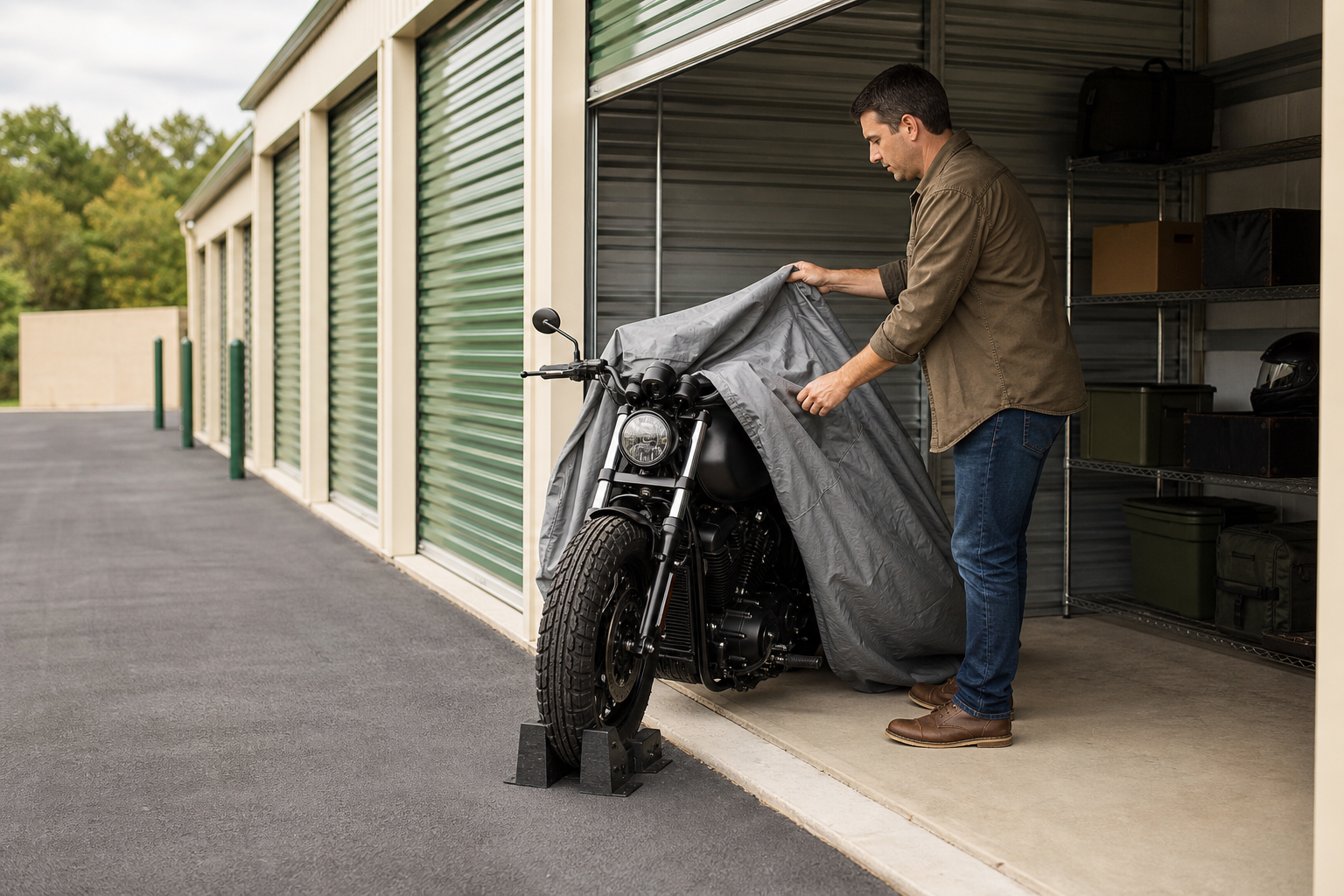
The way you park the bike decides whether it starts in spring. Fill the tank and add fuel stabilizer, then run the engine a few minutes so treated fuel reaches the system—this stops ethanol from corroding the tank and gumming the injectors. Put the bike on a stand or dolly to keep weight off the tires and avoid flat spots, and inflate them to the pressure on the sidewall. Connect a battery tender, since a dead battery after months of sitting is the most common and most preventable problem.
- Full tank + stabilizer, engine run to circulate it
- Tires elevated or aired to sidewall max
- Battery tender on; breathable cover over the bike
Change the oil before storage, not after. Used oil holds acids and moisture that quietly corrode engine internals while the bike sits, so fresh oil going in is the cheapest insurance you'll buy.
Keep seasonal gear organized alongside the vehicle
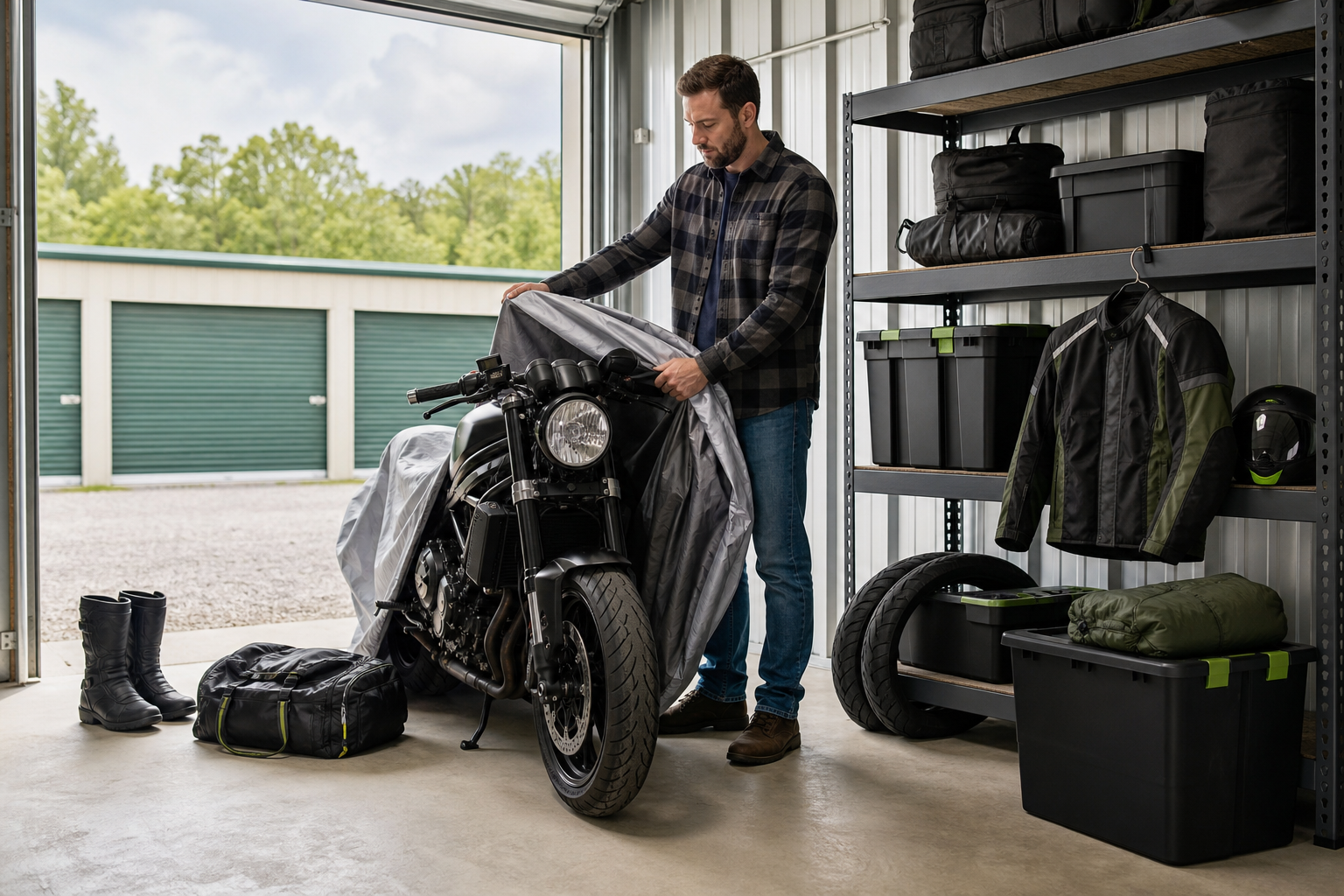
The bike is only half of what goes in the unit. Helmets, jackets, gloves, rain gear, tire chocks, a battery tender, tools, and a spare cover all pile up fast. Use sealed bins so gear stays dry and pests stay out, and label them by category so you're not digging before a ride. Keep frequently grabbed items—helmet, gloves, chocks—near the door, and stack the off-season stuff behind them. If you store a trailer too, keep straps and chocks in a bin clipped to it so loading is a two-minute job instead of a scavenger hunt.
- Sealed bins labeled by category
- Ride-day items near the door
- Trailer straps and chocks stored with the trailer
Hang helmets on a wall hook or set them on a shelf rather than the floor—concrete pulls moisture and cold into the padding, and a helmet that lives in a damp corner starts to smell and degrade faster.
Quick summary
| Decision | What to check | Why it matters |
|---|---|---|
| Unit size | Bike footprint plus trailer/gear | Too small means shuffling every visit; too big means paying for air. |
| Access type | Roll-up door, drive-up, ground floor | Determines how easily and safely you load a heavy bike. |
| Clearance & surface | Door width, threshold lip, floor material | A lip or gravel approach makes low-clearance loading dangerous. |
| Climate control | Steady temp and humidity control | Arkansas humidity rusts metal and cracks leather on long stays. |
| Access hours & fees | Gate hours, admin/late fees, insurance | A cheap rate is worthless if you can't ride when you want. |
Storage numbers worth checking
Use these numbers as decision anchors before comparing facilities. The goal is not to guess a perfect unit — it is to compare the same details across options.
List largest items, box count, and aisle needs.
Use these as comparison anchors.
Monthly rate, promo length, required fees.
Drive-up convenience vs. indoor protection.
| Check | What to compare | Why it matters |
|---|---|---|
| 5×10 | Boxes, small bedroom, seasonal items | A small unit can save money if it truly fits |
| 10×10 | Apartment contents or household overflow | Often a safer middle option for mixed items |
| 10×20 | Multi-room moves or large equipment | More room can reduce loading frustration |
| Climate control | Sensitive vs. durable belongings | Arkansas heat and humidity change the risk |
StorageGuide verdict
Use the article as a decision filter: choose the smallest unit that comfortably fits your load, use climate control for wood, electronics, documents, photos, and fabrics, prioritize access that matches your real schedule, and compare regular rates and fees before trusting the cheapest promotion.
Storage FAQs
What size storage unit do I need for one motorcycle?
A 5×10 fits most single motorcycles with room for a cover and a couple of gear bins. Step up to a 10×10 or 10×15 if you're adding a trailer, a second bike, or a large touring model with cases.
How do I keep the battery from dying in storage?
Connect a battery tender or maintainer, which keeps the battery topped up without overcharging. If a tender isn't an option, at least disconnect the negative terminal. A dead battery is the most common and most preventable storage problem.
Should I fill or empty the fuel tank before storing?
Fill the tank and add fuel stabilizer, then run the engine a few minutes so treated fuel circulates. A full, stabilized tank prevents ethanol corrosion and internal tank rust; a near-empty tank invites condensation.
What should I ask before renting?
Confirm door type and width, the floor surface and any threshold lip, whether it's ground floor or requires a ramp/elevator, the gate access hours, and any admin, late, or insurance fees on top of the base rate.
Find the right motorcycle storage in Arkansas
Compare unit sizes, access types, and climate-controlled options near you, then pick the space that fits your bike, your gear, and your riding schedule.